Showing posts with label doctor who. Show all posts

The Zero Room #8- Trouble and Strife

This time, we've got two episodes juggled out of their original place in the Series 6 running order, and yet still perfectly suitable for the third/fourth episode region of the series. It'll get moodier later on, but for now we have the historical rompage of The Curse of the Black Spot and the gorgeously challenging romance of The Doctor's Wife.

Reviews will contain spoilers, so if you haven't seen the episode yet, toddle over to the iPlayer, or watch BBC Three at some point in the next century's worth of repeats.

Seemingly timed to coincide with the new release of Pirates of the Caribbean: On Stranger Tides, The Curse of the Black Spot begins with the TARDIS picking up a distress call from a troubled ship. As it turns out, it's an actual sea-faring boaty kind of ship towards the end of the 17th century. Captain Avery has just taken the biggest pirate haul in history and now his ship is stranded in the middle of a still ocean, beset by an enchanting and deadly siren.

Occasionally, Doctor Who does a "just for fun" kind of episode. Last year, it was The Vampires of Venice, which also seemed to be timed around the release of Eclipse, sort of. Having rewatched the fifth series recently, I found Toby Whithouse's episode to be much better than I had remembered. Perhaps The Curse of the Black Spot will similarly appreciate in value, but as of right now, I can't imagine revisiting the episode unless it's part of a marathon viewing.

It comes down to the fact that it all feels a little rush-released. In 77 episodes of "New Who" up to this point, there hasn't been so glaring a narrative omission as the one that takes place here. Lee Ross is a relatively minor character, as the Boatswain, but he literally disappears. We see him wounded, and the black spot swells on his palm, but we cut away before he's taken. The Doctor and Avery don't ask where he went, Amy and Rory don't tell them what happened- he just drops out of the plot and reappears at the happy ending.

It shouldn't bother me, but it kind of ruins the whole episode for me. I can take as read that he was snaffled by the Siren for healing purposes off-screen, but that none of the characters ever acknowledge it just feels out of character. Not only for the Doctor, Amy and Rory, but for the programme, which is usually on the ball with even the most fantastical stories. Throw in the fact that it's probably one of the slower episodes of Doctor Who since the series returned, and the joins are all too clear in the process between bumping this one up from ninth to third in the running order and getting it to the screen.

It's not all bad news- it never is in Doctor Who. Hugh Bonneville is happy to be here, even if he seems a little bit harmless for an apparently bloodthirsty pirate. The idea of the Siren is a sound one, and Lily Cole is threatening and bewitching enough that it's convincing to see the Doctor having to second-guess his theories about what she's up to. But when she eventually turns out to be benevolent, the twist doesn't have enough momentum to land with more than a thud. Merlin director Jeremy Webb will be coming back to helm the final episode of Series 6 in the Autumn, and I can't say I'm looking forward to it.

The Curse of the Black Spot brings too little to the table for it to properly stand out. It's by far the most forgettable episode of Matt Smith's run so far, but it's no fault of the actors. In particular, Arthur Darvill does well despite Rory getting yet another death scene. He's dying every single week now- there's just no impact anymore. It's not a poorly conceived episode, but it seems to be have been turned around too quickly. It's textbook MOR Who, but it strives to be a proper swashbuckling adventure. In that much, it goes the way of the first two Pirates of the Caribbean sequels- it's disappointing, but not a total loss. 

The Doctor's Wife was bumped from the episode 3 slot and, before that, from the back end of last year's series. So Neil Gaiman's long-awaited script for the series has the Doctor receive a message that suggests there might be Time Lords, and friendly ones at that, hiding out in a bubble universe. The moment the TARDIS touches down in an impossible scrapyard, it's enfolded in a trap that brings the Doctor face to face with his oldest travelling companion, while Amy and Rory are imperilled in her corridors.

I think it's fair to say that most Doctor Who fans are unabashedly conservative in their outlook on the series, especially those fans who've been watching it since the original run. Those fans waited 16 long years, wanting a new TV series, but more importantly, most of them wanted the series to be the same as it always was. Doctor Who occasionally has to make change, especially in the new era. And Gaiman has given us an episode that could change the way you look at the last 40+ years of adventures in time and space.

Of course, the title is about as apt as The Doctor's Daughter was, being an inventive episode that was hamstrung by its high concept. Figuratively speaking, Matt Smith's Doctor and Suranne Jones, as the human manifestation of his TARDIS, are like an old married couple, hence the TARDIS being The Doctor's Wife. Some will argue that the relationship between the pilot and the motor has always been more complex than we see here, but with such grand performances and writing, I'm finding it hard to complain.

Only Smith and Jones can properly carry off the flirty dynamic between the Doctor and Idris, who's carrying the TARDIS' matrix, or personality if you will, around in her head. It was enjoyable in Day of the Moon a couple of weeks ago with the Doctor and River Song, and Smith sparks off of Jones nicely too. Jones channels Helena Bonham Carter, on whom your mileage may vary, again, as a TARDIS bamboozled by her suddenly acquired humanity. Ever since Ian Chesterton touched the door in An Unearthly Child, she's always been described as alive, and now she gets a chance to bite back after being blamed for the Doctor's directional difficulties for decades.

Inside the police box, Karen Gillan and Arthur Darvill get a proper subplot for a change, and it's one that only indulges in the minimal amount of Rory being killed off. There must be some kind of quota. Never mind though, because it gives them room to breathe without being upstaged by the Doctor, and they're terrorised in their expedition through the corridors by House, voiced by an oddly incognito Michael Sheen. The episode strikes a nice balance between the Doctor and his companions, but the emotional core remains apparent throughout.

As a self-contained episode, it's a very welcome reprieve from the narrative building antics of Day of the Moon, with a very small cast and some very memorable performances. Even Adrian Shiller and Elizabeth Berrington are better on-screen than their characters as written. Richard Clarke, who previously directed the sublime Gridlock, delivers another grand-scale episode that isn't a series opener, a ratings-grabber or a finale. And better, the budget put into this long anticipated story is all up there on-screen, even with the presence of an Ood and the RTD-era console room being visible cost-cutting measures.

The Doctor's Wife canonises a fan interpretation of the Doctor's relationship with the TARDIS- that the latter chose the former and not the other way around- and it would be a shame if that's not acknowledged after the credits roll. Even if the events of this episode are only mentioned one more time, it would be better than entirely forgetting this episode in the more complicated arcing story of the series. It should please the fans with its copious Who literacy, and intrigue the new audience in equal measure- please, Neil Gaiman, may we have another?

--------------------------------------------------------------
We'll return to The Zero Room in three weeks' time with reviews of the remaining episodes before the series takes a break for the summer. Until then, why not share your comments below?

The next episode of Doctor Who, The Rebel Flesh, airs on BBC One and BBC HD on Saturday 21st May at 6.45pm.

The Zero Room #7- Blimey Wimey

It's been a while since we've been here, but I've since found that Steven Moffat's timey-wimey storytelling is slightly less impressive to me than it used to be. Here's a belated review of the festive special A Christmas Carol and a more current review of the opening two-parter, The Impossible Astronaut and Day of the Moon, (to be referred to henceforth by the latter name, to save time.)

Reviews will contain spoilers, so if you haven't seen the episode yet, toddle over to the iPlayer, or watch BBC Three at some point in the next century's worth of repeats.


A Christmas Carol is sort of what it says on the tin, really. Naturally, there's a Doctor Who twist on it all, so we find the Doctor as he takes on the challenge of saving an old miser's soul on Christmas Eve. Kazran Sardick is a grumpy old bastard who holds the lives of over 4000 people, including Amy and Rory, in his hands as they crash towards the ground in a doomed space liner. Not bothering to wait for ghosts, the Doctor visits Kazran at different points in his own life to try and nurture him into a better person.

Going into this one, I actually had low expectations. Even with the standard brilliance of Doctor Who on its side, I was continuously concerned that this was going to be another retread of Charles Dickens' story, as already told by the Muppets, Blackadder, Catherine Tate, Scrooged, etc. etc. etc. Luckily, Moffat manages to find mileage in the timeless concept by injecting a big chunk of wibbly wobbly timey wimey formula.

Once again, it's a companion-lite episode, which leads me to think that Matt Smith is, in fact, tireless. The guy hasn't had a break since taking on the role, even without mentioning all of the spin-off media to which he's lent his talents. He's still on top form here, ticking all the boxes that epitomise the Doctor, and his Doctor in particular. He's righteously angry with Michael Gambon's Kazran, but like a bonkers older relative with his younger incarnations.

Kazran, who's now one of the most travelled of the Doctor's companions, despite having only appeared in this story, makes for an interesting Scrooge-like character. You can argue that the Doctor merely changes the facts to suit himself, and Gambon irately does just that in the later parts of the episode, but it's still an interesting and romantic look into human nature. There's only so much the Doctor can fix, and he arguably makes things worse at first, but you'll allow this episode an awful lot of licence because it's so accomplished in its festivity.

For one thing, there aren't many other TV shows in which an opera singer serenading a flying shark would so easily pass by. Even in Doctor Who, it would be a stretch if you weren't swept up in the romance of it all. In its own ways, it supersedes the two immediately previous Christmas specials by being neither disposable (The Next Doctor) or high drama (The End of Time). Like the best of Doctor Who, this one finds drama in... well, weird places.

A more dynamic and original title could have helped, but like I said, A Christmas Carol does what it says on the tin. It joins the ranks of Voyage of the Damned as an infinitely rewatchable bit of festive Doctor Who, and deploys the timey wimey stuff to create humour as much as pathos. It's the perfect underline for a great first year from Steven Moffat and Matt Smith, who continues to cement his position as one of the best Doctors we've ever had while constantly building on his portrayal.

After an absence in the previous episode, Amy and Rory have taken a leave of absence from the TARDIS at the beginning of Day of the Moon's first part. But then they're summoned to America, where they see an older version of the Doctor murdered by an astronaut. When a more contemporaneous version of the Doctor turns up, Amy, Rory and River Song keep his demise as a secret from him as they're dragged into another adventure in 1969. President Richard Nixon has been getting regular phone calls from a scared little girl...

Hm. This one's going to be a case of picking apart the good stuff from the ongoing arc. As a much more blunt counterpoint to last year's prelude, with the Doctor and young Amelia inspecting the crack in her wall in The Eleventh Hour, the opening of this one sets up a death fakeout. Yeah, I said "fakeout". Even the target audience must now be unconvinced by all of the deaths that happen and then don't happen under Moffat's run. There's some enjoyment to be got out of wondering how he'll get out of it, but it can't be said that part one of this story was much fun with all of the foreboding and enigma building going on.

Without any exaggeration, this series is starting to remind me of Lost. That random woman with the eye-patch who Amy sees was where the comparison occurred to me, but it's all over this opening two-parter like a rash. It's the first time a new series has opened on a two-parter, and it would have been preferable to be thrown into the action right away. If Moffat has answers to all of the questions raised here, I'm hoping he gets to some of them at the mid-series finale rather than dragging them out to episode 13 in the autumn.

It's a shame that I've begun to feel this way about all of the temporal gubbins, because here in particular, it distracts from the really good stuff. Moffat partially answers one of the previous series' going concerns by introducing the Silence, the race responsible for blowing up the TARDIS in the finale. If Moffat's first series was lacking in something, it was new monsters, so it's brilliant to see these creepy monsters so well conceived and realised by the production team.

There's also some gorgeous work by Toby Haynes, the best director on the previous series, whose work looks even more cinematic for the location shoots carried out in America than they did on sets somewhere in Cardiff in his previous episodes. Mark Sheppard, as Canton, proves to be one of those companion-who-never-was types with a pitch perfect performance. And after six episodes, River Song finally becomes more likable- Alex Kingston and Matt Smith really sell it this time, and their flirting shows the blossoming of some actual affection between them rather than some vague and non-committal prophecies.

Day of the Moon ultimately falters because of the expectation of episodes to come. While the good stuff here is really good, from the Nixon-related comedy to the very creepy central conceit, it's constantly obscured by scattershot enigmas. Hopefully it's all going to make sense in the end, because it sure as hell doesn't right now. This is a potentially great story that's running on about two-thirds capacity because of the timey-wimey stuff, so there's plenty of scope for rewatchability once the series is over. The trouble is, I'd preferred to have enjoyed it as much the first time around.

--------------------------------------------------------------
We'll return to The Zero Room in two weeks' time with reviews of episodes three and four. Until then, why not share your comments below? Yes, I did see that little girl regenerating. No, it didn't shock me. That should tell you something, I think.

The next episode of Doctor Who, The Curse of the Black Spot, airs on BBC One and BBC HD on Saturday 7th May at 6.15pm.
Halloween at Writers' Block North East

Halloween at Writers' Block North East

I'm in the unusual position of having reviewed all of last week's new releases last week, with the exception of The Kids Are All Right (come back on Wednesday or go over to Den of Geek around about... now), so it's as good a time as any to talk about the work of Writers' Block North East.

For Halloween last night, they held their monthly(ish) film discussion group, and in a makeshift and very off-hand kind of way, I programmed the double bill horror screening. I rave about films on here and how they need to be better, so it obviously had to be something from the paragon of great horror movies. Did I pair Onibaba and The Haunting? Or go for a John Carpenter twofer with The Thing and Halloween? Fuck no, I plumped for Trick 'r' Treat and Burning Bright.

First off, let me catch you up. Writers' Block North East is a group for creative stuff and a drop-in centre for all manner of writers, centred in Middlesbrough and organised by the wonderful team of Laura Degnan and James Harris. I say "wonderful team" because in the week that Let Me In comes out, I'm aware of my own presumption that people who criticise actual creative work on the Internet have to be invited into dwellings where actual constructive work is occurring, and they're kind enough to allow me on the premises.

More than that, they got my first produced script all finished when I won their competition to write a Potter Puppet Pals style parody, complete with actual puppets. Doctor Who and the Inky Doom is currently in need of a follow-up, in which I'll surely manage to avoid sticking my head and/or shoulder in the back of the shot when operating the Matt Smith puppet. While work continues on the sequel, Inky Doom is presented on YouTube below, for your enjoyment.


So, to the business of Halloween. Having neglected to turn up in costume, I was a bit taken aback by the full-on face paint stand operated by John Noble, one of our resident actors/directors/ridiculously creative people. Someone else brought a carved pumpkin. I brought a perennial Halloween film that's only three years old, and a film where a tiger chases an autistic kid around a house.

So first off, we watched Trick 'r Treat. For those unfamiliar, it's the Bryan Singer-produced anthology horror homage, in which four interlinking stories unfold over one Halloween night. Crossing between stories is Sam, ostensibly a little kid dressed up as a scarecrow, but actually a vicious little bastard who doesn't like it when people don't get into the spirit of the evening.

I saw this film earlier this year, and decided right then that I would watch it every Halloween. It may not have the iconic status of those films I mentioned earlier on, but it perfectly captures the spirit of the event with a grim sense of humour and a surprisingly high youth mortality rate. The acting is great, with particularly great performances by the newly-cuckolded Lizard from the Spider-Man sequels, Dylan Baker, and a deliciously cantankerous turn by Brian Cox.

The reaction from the Writers' Block patrons was pretty positive. It's a great start to any Halloween marathon, so naturally, we moved onto the combo-breaking killer animal flick Burning Bright. This one plays out a little like one of those Lemony Snicket books, not only in the central idea of an unscrupulous guardian trying to kill off orphans, but in how the blurb connects disparate elements like a tiger, a hurricane, a scholarship and a cameo by Meat Loaf as a tiger dealer.

It's obviously got a higher budget than the usual direct-to-DVD schlock with this kind of premise. They bothered to wrangle real tigers rather than attempt hokey CGI. While it's cheesy, and slow to get moving even at a mere 70 minutes in length, it eventually got the desired reaction out of the audience. They laughed their arses off. All the same, it's extremely well-intentioned. Its cast, aside from Mr. Loaf, are mostly on the cusp of renown for acting in other, more prestigious films, but none of them are snidey or ironic in their presence. In particular, Briana Evigan proves a tough as nails horror heroine- who would have expected it of that one lass from Step Up?

The direct-to-DVD double bill went down a treat, and I'm sure I'll blog about other film discussion groups at Writers' Block as and when they occur- I think the next one is Christmas-themed, so even though I'm not programming it, I'm lobbying for The Muppet Christmas Carol and Kiss Kiss Bang Bang. Don't hold your breath for that festive twofer though- it's time for me to be quiet and write something new for the Doctor and Amy Pond...

Writers' Block North East is currently situated in the We Are Open space on Albert Road, Middlesbrough- add them on Facebook and Twitter. Trick 'r Treat and Burning Bright are both currently available on DVD.

I'm Mark the mad prophet, and until next time, don't watch anything I wouldn't watch.

The Zero Room #6- The Many Faces of Matt Smith


Whether you're calling it Series One, Series 5 or Series Fnarg (Steven Moffat's suggestion and my own personal favourite), it's difficult not to applaud Doctor Who for recapturing and developing the formula over the course of the last thirteen weeks or so.

Well I was going to do a big retrospective on the series, but I think it's pretty comprehensively covered in my reviews of the series on this very blog, so I'll settle for filling the requisite Wednesday slot with some funny faces pulled by the Eleventh Doctor.


The obvious indomitable force through Series Fnarg is Matt Smith's Doctor. Week after week I haven't thought of a single bad thing to say about him. With some of the awkwardness that always seemed false when Tennant's Doctor was rattling around the cosmos, Smith is shaping up to be one of the best Doctors ever, if he keeps giving us a different expression every week.


So why make a blog post that is dangerously close to making this place a cheese wheel? Well, the tabloids have ran out of news for the summer again, so they've decided to write about how Smith is being axed due to low ratings. Besides ratings being non-stories in and of themselves, overnights don't even particularly matter anymore.

They love that word, don't they? "Axed." What a pointy and pernicious thing the tabloid press is. No one ever leaves or is fired, they have to be "axed". Presumably in all that coverage of serial killers they occasionally splatter the front pages with, there's someone tutting that axe murdering isn't practical anymore, and that axes instead have to be applied to things like Fred Elliot deciding to take time off from Coronation Street.


The coverage of such obsolete stories on this here blog only brings me closer and closer to writing irrelevant stuff. But hey, you're enjoying the funny faces right? To come clean, my puppet spoof odyssey for Writer's Block North East, Doctor Who and the Inky Doom, still hasn't made it onto YouTube, so the planned entry for today fell through.

If anyone feels short-changed, come back on Friday when I promise there'll be worthwhile content. And sometime thereafter for the planned puppet blog. Otherwise, just be assured that Johnny Depp isn't going to play the Doctor in a film, unless you're watching Sleepy Hollow and decide to think creatively. It's Matt Smith all the way- now, everybody do the dance...

The Zero Room #5- What's The Crack?


Matt Smith's first series drew to a close on Saturday night on BBC One, and the last thirteen weeks have been a hell of a ride. This penultimate Series 5 post reviews the romantic comedy episode The Lodger and the epic, balls-to-the-wall final two-fer, The Pandorica Opens and The Big Bang (to be referred to henceforth by the former name to save time)

Reviews will contain spoilers, so if you haven't seen the episode yet, toddle over to the iPlayer, or watch BBC Three at some point in the next century's worth of repeats.

-----------------------------------------------------------------


The Lodger opens on an unexpected incident with the TARDIS, which strands the Doctor on contemporary Earth. He's forced to move into a house on Aickman Road, sharing with a laddish flatmate called Craig. Craig pines after his best friend Sophie, likes playing football, and is suitably charmed by the new lodger because he's weird and can cook well. Just as the Doctor is oblivious to how he's usurping the things that are important to him, Craig is oblivious to whatever is living on the top floor of his house. People go up, but never come down...

The episode 11 slot has been put to various uses since the series returned. It's the slot that gave us fluffy episodes like Boomtown and Fear Her, but was later used for ominous stage-setting episodes like Utopia and Turn Left. What's special about The Lodger is that Gareth Roberts' script seems to somehow traverse both, while still spending more time in the former camp than the latter. It's adapted from a pretty good comic strip that Roberts wrote for Doctor Who Magazine back in 2006, in which the Tenth Doctor lodged with his companion's put-upon boyfriend Mickey for a week or so. The screen translation is even better- Matt Smith's Doctor basically is a fish-out-of-water, most of all in this scenario.

Where David Tennant's portrayal had a reasonably easy grace, Smith plays the oddball well enough to pull this plot off fantastically. He eclipses James Corden's Craig in the acting stakes, and that would usually be a good thing. I really don't like James Corden, see. Here, he's close to being endearing, which makes me realise I simply don't like his overexposure in the media. He's an actor, not a stand-up comic, so I suspect his ubiquity elsewhere makes him seem more annoying than he really is. It is great to finally see the radiant Daisy Haggard in the show as Sophie too.


Karen Gillan takes the backseat for this one, and it's curious to see that we get a "companion-lite" episode in this series while the "Doctor-lite" counterpart is conspicuous by its absence. Maybe Matt Smith really does have the energy to keep bounding around for nine months without an episode to sit back and put his feet up, but it'll be interesting to see where Steven Moffat goes if he does a Doctor-lite episode next year, with a 14-episode filming run to do instead of this year's 13. Moffat previously gave us Blink, so we know how good he can write this show even without the Doctor, but you'll never hear me outright ask for an episode with less Matt Smith.

The obligatory menace of the story sits well with the more comedic elements too, although I think Roberts possibly over-egged the menace upstairs with the number of people we see wander in off the street. What's interesting is that we never get an explanation for just who built the second-storey TARDIS on top of Craig's house. It's a fine twist, and pays off as a conclusion to this particular episode, but it's in this character's retained mystery that you have to wonder if it's going to be important later.

At its heart, The Lodger is a romantic comedy, and a fine one at that. It's actually one of the unexpected pleasures of the series, proving to be warm, funny and the episode that would have sat best in the Davies era. Luckily, it comes with the great comic timing of Matt Smith instead, who gets some great one-liners ("Can I put you on hold? I need to eat a biscuit"), while continuing to develop his incarnation before the big finale.
 -------------------------------------------------------------------

After eleven weeks, everything converges as the two-part finale begins with The Pandorica Opens. By way of Liz 10's royal art collection and Churchill's bunker, River Song retrieves one of Vincent Van Gogh's final paintings, for which the episode is named. It depicts the explosion of the Doctor's TARDIS, an event that would be massive enough to crack the skin of the universe itself. In 102AD, the Doctor will find out exactly what the Pandorica is, and Amy Pond's fractured life will finally begin to make sense.

The high watermark of the new series for me was The Parting of the Ways, as far as finales went. I enjoyed Doomsday, Last of the Time Lords and Journey's End too, but they often fell short of their superior openings. The Pandorica Opens bucks the trend in a big way- where Russell T Davies' thirteenth episodes in each series came to give the impression that he'd written himself into a corner each year, Steven Moffat appears to have planned this all along.

With director Toby Haynes on board, the story is certainly the best two-parter since 2007's Human Nature and The Family of Blood, while still being a fundamentally different beast. The stakes have never been more massive, and the universe having been ended at the end of part one trump even RTD's increasingly hyperbolic threats without becoming ridiculous. RTD largely avoided silliness too, but there was still a question of whether or not the Moff would pull it off.


Haynes helps a lot by lending the story the most cinematic direction the series has ever had, moreso than this series' The Time of Angels. His influences are very much worn on his sleeve, encompassing both George Lucas odysseys, Star Wars (see those scene transitions?) and Indiana Jones (everything below Stonehenge) alike. It's his first time on the show, but I actually find it hard to imagine any of the more seasoned directors shooting the monster mash here as well as he does.

To bring in Daleks, Cybermen, Sontarans and whatever other monster prosthetics were lying around at the studio may well have been an economic move, but it pays off wonderfully. For one thing, the Cybermen haven't been as effective as this in a long long time. And the scale just doesn't get any bigger than the moment when the Doctor is shoved into the Pandorica, as his enemies hope to prevent him from inadvertently destroying the universe. This massive alliance of monsters is almost apologetic for the comparative lack of monsters in the second part, which focuses much more on character and on the resolution of the series arc.

In the way of other two-parters penned by the Moff, it's definitely a story of two very distinctive halves, and the latter is much more cerebral than you'd expect. We've seen wibbly-wobbly timey-wimey stuff before, but it somehow still seems fresh here. At the same time, there's some beautiful character development for Rory, who's been resurrected as a plastic duplicate by the Nestenes. Arthur Darvill is one of the unsung talents working on this series, and it'll be fun to see where the millennia of experience he has on the Doctor takes him next series. Then again, it's always been easy to overlook him with Matt Smith at the helm.


And what a great Doctor he's turned out to be. He has the full gamut of emotion in this story, and the only time it ever seems tired is when the Doctor believes he's going to die, which we already saw David Tennant do on New Year's Day. Smith still combusts with energy every time he's on-screen, and he plays well against everyone who shares it with him, from Caitlin Blackwood, who makes a welcome return as young Amy, to Karen Gillan, whose Elder Pond comes to the fore as her arc is partially resolved.

Even River Song is more palatable this time around. Even though she utterly divested this story of jeopardy by glibly recalling the Pandorica at the end of her last appearance, the character plays a more interesting role without shedding any of her secrets just yet. That's promised for next year, along with what actually caused the TARDIS to explode and nearly bring about the end of the universe. It should be a lot more disappointing than it actually is, that these threads are left hanging. Trouble is, this story is just too wonderful.

Emotional, exciting and ultimately very satisfying indeed, The Pandorica Opens is the most fulfilling series finale since Christopher Eccleston's swansong back in 2005. Both episodes are fantastic in distinctive ways, with the constant of the central performances holding up through to the tantalising Christmas teaser. The story does its job as both a shameless bit of fan-service and as a quality bit of family drama. And best of all, it has a happy ending, which we had never seen in the new series, up until Rory became Mr. Pond, anyway. The upbeat conclusion makes you long for Christmas and the next series more than ever before.

Bravo Mr. Moffat.
-------------------------------------------------------------------
I'll be back soon with a quick overview of this series of Doctor Who. Until then, why not share your comments below?

Doctor Who will return to BBC One and BBC HD on Christmas Day.

The Zero Room #4- Silurians and Sunflowers

Back to back, the fifth series of Doctor Who has given us its most reflective story and its most progressive. This post covers the Silurian two-parter The Hungry Earth and Cold Blood (to be referred to henceforth by the latter name to save time) and poignant "celebrity historical" Vincent and the Doctor.

Reviews will contain spoilers, so if you haven't seen the episode yet, toddle over to the iPlayer, or watch BBC Three at some point in the next century's worth of repeats.
--------------------------------------------------------------

Aiming for Rio, the TARDIS rocks up in a tiny Welsh mining village in the near future at the beginning of Cold Blood. There, an enterprising team of scientists have dug further down into the Earth than anyone has before, but the Earth seems to be fighting back. From beneath the surface, the Silurian race emerges, disturbed by the drilling and annoyed that humanity has evolved all over their former home. The Doctor knows the homo reptilia of old and attempts to broker a peace between the two races.

So that's a leisurely-paced multi-episode story about a drilling project and the Silurians? Classic fans will around about now have noticed that this story's straight out of Jon Pertwee's first season, and it's certainly the best reflection of the classic series since the show returned in 2005. As to the Silurians themselves (whose origins and history I documented over on Den of Geek), they were pretty comprehensively redesigned. The use of prosthetics allowed for expression and some great acting from Neve McIntosh and Stephen Moore, but ultimately, most Silurian stories pan out the same.

What's always been interesting about the Silurians is that they're not really monsters, and that was nicely internalised to their race by Chris Chibnall's scripts, when we see the Silurian military at odds with its high command and its scientists. Arguably a lot more monstrous was doting mother Ambrose, played with equal measures of weakness and malice by Nia Roberts. The dichotomy between humanity and the Silurians remains interesting even when the ultimate outcome of a stalemate is predictable.


Ambrose aside, Chibnall is eager to write humanity at its best as a counterpoint to all the parochialism between races. To that end, we get Meera Syal on top form as Nasreen Chaudry, who now stands firmly amongst the ranks of Companions Who Never Were. Her excursion to the Silurian city with the Doctor is well acted and Nasreen is a very likable character whose return shouldn't be totally out of the question for Moffat and the crew at BBC Wales. Elsewhere of course, we have Arthur Darvill's Rory sacrificing his life at the end of the episode.

The trouble is, what should be Rory's finest hour is undercut by its relation to the series arc. Is the big twist that Rory is erased from history? Or that his death came from one of those pesky cracks in time? The bit of TARDIS signage the Doctor retrieved from said crack also served to distract from what should have been a much more emotional twist. It was upsetting, yes, but you can't shake the feeling that it was done so quickly that it can't possibly be permanent. I suppose we'll find out in a few weeks' time when the series finale rolls around.

All in all, Cold Blood makes for a sumptuously designed two-parter that gets better as it goes along. So on average, it's fine, and is restrained by the lack of anything particularly fresh for the Silurians to do. A cosmetic makeover does not translate into strong character development. Still, it's the best use of the characters since their inception back in 1970, so that's good to watch. The cast are as capable as ever, but you can't help but wonder if this might have been a much better single episode rather than the leisurely paced two-parter it ended up as.


The events of the previous episode have only vestigial consequences in Vincent and the Doctor. The fairly staid title belies a strong story about Vincent Van Gogh in the final year of his life. When the Doctor and Amy go to an art exhibition and spot a monster in the window of "The Church at Auvers", they have to go back in time and ask the artist about it. They find a man utterly depressed by his lack of success and by his status as a pariah in the community. More importantly, he's distressed by visions of a savage beast that only he can see.

Richard Curtis wrote this episode. You might let that colour your expectations, but I very much went into this one expecting either a really fun romp or a bit of a misfire, in correlation with his Blackadder scripts or his romantic comedies respectively. I'm pleased to say that this is neither, and Curtis has instead created a story that is almost unique in the show's history. It maturely addresses depression and mental illness without ever forsaking the adventure element of the series format. While previous "celebrity historicals" have been of a more romp-y disposition- see this series' Victory of the Daleks, for instance- Curtis is altogether more probing.

The excellent writing is informed by a tour-de-force turn by Tony Curran as Van Gogh. He gives a perfect portrait of an utterly desperate and isolated man, whose life has only gotten worse with the arrival of the Krafayis, a great big parrot-polar bear hybrid who's largely invisible. Even with the necessity for those elements in a show like this, Curran is powerful and emotional. There are few things on television in recent memory more affecting than the out-of-the-leftfield breakdown Van Gogh has at one stage. It's brilliantly compounded by Matt Smith gadding about as Vincent sobs into his pillow, wracked with an intangible misery.


Smith and Karen Gillan rise to the occasion magnificently as well, with Amy Pond suffering from grief over Rory even though she can no longer remember why. Her chemistry with Curran is part of what makes the episode so compelling. Well, that and the cameo appearances by national treasure Bill Nighy. Nighy facilitates the episode's most moving scene as he describes Van Gogh's legacy with the overwhelmed artist himself within earshot. It's a shame that director Jonny Campbell doesn't trust us to be touched by this scene alone, laying "Chances" by Athlete all over it in a soundtrack choice that verges on being cloying and mawkish.

There are other problems with the episode. Like Amy's Choice, an episode this isn't quite as good as, it's better as a piece of drama than as an episode of Doctor Who. But while the Dream Lord and the pensioners could keep kids engaged, I have to wonder if the younger audience were confused and upset by the goings-on. Here we had the Krafayis, which was nicely designed but not particularly well-rendered, as special effects go. It wasn't embarrassingly bad, but it was more effective as an invisible monster than in the moments where we actually see it.

Vincent and the Doctor is something unexpected and fresh for the celebrity historical type that saw so much use through the Russell T. Davies era. We're still expected to take as read that Van Gogh is a genius as with Shakespeare and Agatha Christie before him, but Curtis actually goes to considerable lengths to show us why. In many ways that makes it the best since The Girl in the Fireplace. It's not the kind of episode you want to see every week, but you never want this standard of writing to go away. With luck, Richard Curtis will return to the series in the future, but if another episode never materialises, there's still a lot to admire in this.
--------------------------------------------------------------
I'll be back in three weeks' time with reviews of the final stories of the current series. Until then, why not share your comments below?

The next episode of Doctor Who, The Lodger, airs on BBC One and BBC HD on Saturday 12th June at 6.45pm.

The Zero Room #3- The Vampires of Venice and Amy's Choice

We've now passed the midpoint of the fifth series, and it looks to be doing pretty well. This post covers The Vampires of Venice and Amy's Choice.

Reviews will contain spoilers, so if you haven't seen the episode yet, toddle over to the iPlayer, or watch BBC Three at some point in the next century's worth of repeats.
--------------------------------------------------------------

Following a come-on from Amy at the end of the previous episode, The Vampires of Venice opens innocuously enough, with the Doctor bursting out of a cake at Rory's stag night, in place of a lovely girl in a bikini. The Doctor's decided that the husband and wife to-be need to reaffirm their relationship, and offers them a date in 16th century Venice. There they find the city has been closed down for fear of plague, and the students of Rosanna Calvierri's school for girls stalk the city for new recruits. More than that, they're vampires, or at least masquerading as vampires, and they have plans for the impossible city. Ah, Venice...

After the new direction of the previous five weeks, writer Toby Whithouse revisits an old favourite of the series, the pseudo-historical. Notably, it's the first historical since 2005 to go back to before the 20th century without implementing a "historical celebrity", like Shakespeare or Queen Victoria. The Vampires of Venice comes along nicely without that baggage, and it's very nicely done by the Being Human scribe. It's not going to be anyone's favourite episode of the current run, but it's certainly decent.

For starters, it looks gorgeous, with the production team having found a marvellous double for historical Venice in Croatia, a location they're going to revisit later in the series to use as Paris. It's a versatile location that works beautifully here. Those disappointed by Amy's lack of wonderment thus far won't like how Karen Gillan once again plays it pragmatic, but might instead enjoy Arthur Darvill's return as Rory. He's got a great sense of comic timing that he didn't get to show off as much in the series opener, and he's simultaneously both reminiscent of and distinct to the show's previous tin dog, Mickey Smith.


Once again, Matt Smith shines in the lead role, here given a lot of material up against Helen McCrory as Rosanna, queen of the "vampires". There's a little of the last of the Time Lords angst that came to characterise the previous two Doctors, but his quiet and righteous fury continues to be one of the most compelling parts of his portrayal. McCrory holds her own to make a meal of a less than memorable villainness, and the vampires in general are tackled inventively. That's an achievement for an idea that's not only been done at least three times in Doctor Who before now, but is also being violated by Stephanie Meyer and any number of clingers-on to the current vampiric vogue.

As I mentioned, no-one is going to declare this the best of the series by the time it's over, and that's largely because the plot goes through the motions. In a Doctor Who drinking game, you'd be fairly sozzled if you had to take a shot every time the Doctor climbed a perilously tall tower in order to save the day, and the reliable supporting character efforts come to the fore once again with concerned father Guido and his daughter Isabella both sacrificing themselves. The lack of consequence doesn't ring true here, even for a story where the hero is in a different place each week. Instead, we get another hook for the series finale, the momentum for which seems to be really building up now.

The Vampires of Venice is a romp, through and through. Romping isn't synonymous with being average, but I'd have preferred a throwbak to Doctor Who's earliest historicals like The Romans rather than something that feels spiritually closest to The Shakespeare Code. It's good all the same, with some great shooting, cracking one-liners and wonderful acting, but it wouldn't be unbelievable if it left you cold. Especially if the prolific success of Edward Cullen and his ilk is doing your nut.
--------------------------------------------------------------

A week later in Amy's Choice, we find Rory has finally got Amy to settle down in Leadworth, and five years on from their travels with the Doctor, she's about to have their first child. The Doctor still comes to visit every now and again, but just when he does, birdsong fills the air. The next minute, they all wake up inside the TARDIS, having all just had the same dream. There's more birdsong, and they're back in Leadworth. A dangerous foe has ensured that they face a deadly threat in both world, but only one world is real. If they die in the dream, they wake up in reality, but which reality is which? And if Amy has to pick, which of the men in her life will she choose?

First and foremost, this is obviously the "cheap" episode of the run, largely constrained to a small village and the TARDIS. Therefore it's an even more impressive feat that this is my favourite episode of the run so far. Its circumvention of the low budget is nothing short of genius, taking the opportunity to go for some real drama and character development over monsters and spectacle. Of all things, it's most surprising that it's written by Simon Nye, creator of Men Behaving Badly, who shows a great capacity for both drama and comedy in his first episode for the series.

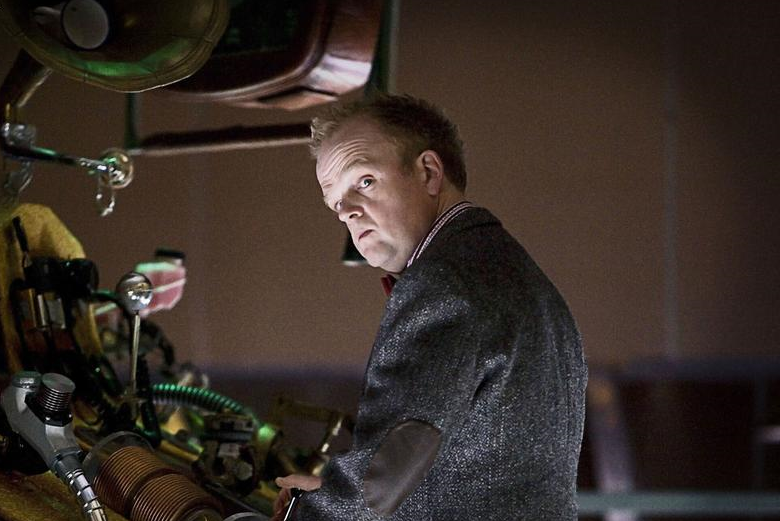
It has a terrific villain at its heart in the form of the marvellous Toby Jones. His self-styled Dream Lord is enigmatic and incredibly vindictive towards the Doctor, and Jones knocks it out of the park completely. He's one of the most memorable villains I can think of in the new series, and as I noted over on Den of Geek, he bears more than a few similarities to a certain enemy from the past. The closing moments seem to suggest he'll be back in the future, and I really hope that pans out.


The regulars are great too, with Matt Smith taking a comparative backseat to allow Karen Gillan and Arthur Darvill to shine. Amy's name is in the title and it's really a turning point in the series for her- after the end of the Angels two-parter, she's made to realise how much she cares for Rory, to the stage where she's prepared to die for him. Darvill also steps up his game dramatically, still finding time for some brilliant physical comedy involving beating up old ladies. Smith's presence is still felt throughout, especially with the revelation that the Dream Lord is made of the Doctor's darkness. The entire episode is creepier in retrospect for that revelation.

The episode that Amy's Choice bears the closest resemblance to is Midnight, and although this isn't as good, it's economic with its budget and endlessly inventive and memorable. It's also better as a piece of drama than as an episode of Doctor Who, but it certainly won't alienate any younger fans. Other shows have trotted out dream sequences in the past, and this seems almost like a massive "oh yeah?!" to Russell T. Davies' previous assertion that nothing of dramatic value can happen in dream sequences. He'd usually be right, but almost all of this one takes place in one dream or the other, and it's brilliant.

With a fantastic villain and some wonderful turns in the plot, Amy's Choice is the highlight of the fifth series thus far, although it's good for entirely different reasons to the Angels two-parter. It's not the most fun, most re-watchable episode ever, but it is very well put together and doesn't dispense with the sense of humour you've come to expect from Nye and from showrunner Steven Moffat. Urgent, satisfying and downright superb.
--------------------------------------------------------------
I'll be back in a fortnight with reviews of the Silurians' return in The Hungry Earth/Cold Blood and the poorly titled Richard Curtis-penned Van Gogh episode, Vincent and the Doctor. Until then, why not share your comments below?

The next episode of Doctor Who, The Hungry Earth, airs on BBC One and BBC HD on Saturday 22nd May at 6.15pm.

The Zero Room #2- Angels & Daleks

Yeah, by reviewing two-parters as one story, this feature will seem fairly intermittent, but plunging back into the TARDIS, I've got reviews of Victory of the Daleks and the angelic double whammy The Time of Angels and Flesh and Stone (to be referred to by the former from here on, for speed).

Reviews will contain spoilers, so if you haven't seen the episode yet, toddle over to the iPlayer, or watch BBC Three at some point in the next century's worth of repeats.
Picking up from the tease at the end of the previous episode, Victory of the Daleks finds the Doctor facing the metal meanies during the Blitz, with an excitable Winston Churchill ready to deploy them against the Nazis and win the war. The Daleks are generally keeping their eyestalks down, serving tea and submitting to being fitted out with camo-gear and a Union Flag ID tag, but the Doctor knows better. As usual with the Daleks, there's a much bigger plot at work, and Churchill seems oblivious to their true nature. The problem is, matters only get worse once the Doctor actually reveals the truth...

A better title might have been The Daleks Have Landed, because it's the feel of the similarly titled Michael Caine adventure that writer Mark Gatiss has lovingly recreated. It's an interesting spin on the Doctor's oldest enemies, and one that sees them undergo a new paint job and a design overhaul. Ah yes, that redesign. Decried by many as awful shit, I really can't agree. Although people have called them Power Rangers and the like, they reminded me more of the latter day Minis- they're a meaner and somewhat more hefty spin on a classic design. And come on, they look good, really. Embrace change, when it's this good!

The trouble is that Gatiss is terribly eager to get this new Dalek paradigm, which is in no small part responsible for the uneven pacing. In the first 15 minutes, I was impressed by how it was zipping along, but the plot peters out before the last 10 minutes.
Although I really liked Bill Paterson as Bracewell, and appreciated the way his character developed, he's not my idea of a barnstorming climax in an episode called Victory of the Daleks, even if it does make more sense as an ending than some of Russell T. Davies' Dalek episodes. It's great that the Daleks win for a change, but they win far too early. This feels almost like the preamble to the next Dalek story of the Moffat era, rather than a memorable adventure in its own right.

As a result, Ian McNiece's Churchill is also sadly sidelined. What we do see of him is brilliant though, and I think there's real potential for him to be a recurring historical character- he has the Doctor's phone number after all. Karen Gillan doesn't have much to do either, Matt Smith continues to prove his mettle with his indignant attitude to the Daleks- to him, their survival is obscene, and at one point he loses his temper with them altogether. A Doctor can often be defined by how he interacts with his greatest enemies, and he eschews both Christopher Eccleston's outright rage and David Tennant's righteous and weary approach. It's also fitting that Smith's first Dalek story evokes Patrick Troughton's debut, The Power of the Daleks, in having the Daleks pretend to be benign in order to entirely ruin humanity's shit.

To fall short in the most anticipated episode since the Daleks' inception, finally placing the Nazi allegories in a WW2 setting, would be unforgivable if it weren't for the witty script and the great performances. It collapses under the weight of tremendous expectation, but it's certainly not bad. It's an action packed episode that doesn't skimp on story and, despite the more obscure ramblings of fans online, it isn't a merchandising ploy to sell more multi-coloured Dalek toys. Victory of the Daleks could have been an all-time classic, but it's perfectly fine as an enjoyable early entry to the series, evocative of those films on Sunday afternoon telly as much as the Daleks' inexorable progress.The following two parter also has a returning monster of course, but The Time of Angels is head, shoulders and everything else above the previous episode. Opening in a particularly bombastic pre-credits sequence in the first part, the Doctor meets his possible future wife River Song again as she jumps out of an airlock. The ship she's just escaped has a deadly cargo- what is reputed to be the last Weeping Angel in existence- and it later crashes on the planet Alfava Metraxis. The tables are turned on the Doctor and a group of soldiers sent into the wreck to recover the Angel, and Amy Pond is pushed to the very limit as she struggles to survive.

Steven Moffat has said that this story's relationship to the Weeping Angels' debut Blink is as Aliens was to Alien. It expands the monsters while bringing in new, seemingly disparate elements to make it into more of an action story than a horror. The horror is still there for the stone gribblies, whose menace is as indelible as ever. A minor criticism is that they no longer "kill you kindly", as the Tenth Doctor put it first time around. Luckily, the far less interesting modus operandi of snapping necks doesn't weaken their fear factor at all- instead the uncomfortable provision of a voice via a murdered soldier just undercuts the fact that you couldn't negotiate with them before.

That said, we learned here that whatever holds the image of an Angel is itself an Angel. Someone finally decided to create a Doctor Who monster that can come out of televisions to kill you if you look at them- why has no-one thought of this before?!
It's not the Angels' show though, and we still get a great deal of interaction between Matt Smith and Karen Gillan. They each remain note-perfect for the entire series thus far, and Gillan in particular shines out here. She really sells the horror of a blind walk through a horde of Angels just as much as the innuendo of the surprisingly risque closing scene, which threatened to put the "Flesh" in the episode's title if Amy got her way with the Doctor. Less endearing is Alex Kingston as River Song, especially in the first part. For instance, note how a lovely trailer-friendly line about the Weeping Angels is delivered as smugly as the rest of Kingston's dialogue. You'd think any normal person would sound a little more apprehensive about "the most malevolent creatures evolution has ever produced". She knows more than the Doctor does, and thus more than the viewer, but I'd like her more if she didn't bloody act like it so much.

Moffat almost seems to have anticipated that neither River Song or the Angels themselves would leave as much of an impression on their second go around, and it's a good thing he never solely relies on them. To wit, we see the series arc begin to pay off at a point in the series earlier than ever before. Rather than continuing to vaguely pan across the crack in time for the rest of the run, it's embedded at the heart of the story here, and the potential ramifications of its presence will surely loom large for the rest of the series. It also provides a satisfying fan moment when one of the more confusing aspects of 2008's The Next Doctor is explained away, albeit with a mechanism that might allow many more stories to be completely retconned.
His writing continues to bewitch though, whether through one-liners or chills or wonderful character interaction. Here it's best typified in a wonderful final scene for the unfortunate Father Octavian. Even in an angelic headlock, the drama is incredibly potent between him and the Doctor as the two exchange warnings and condolences. The Time of Angels is also brilliant for having been helmed by director Adam Smith, who really makes this one look cinematic rather than televisual. He also delights in terrifying the young audience as much as the Moff does, and keeps the adrenaline going for 90 minutes in a way that the Dalek story couldn't manage for 42 minutes.

The Time of Angels excels as an opening two parter, a slot that's traditionally been a weaker point for the show since 2005, the Series 4 Sontaran adventure excepted. It's as witty and scary as we could expect from Moffat's writing, posturing for a broader story through the entirity of Series 5 without ever disrupting the story at hand. There's an energy here that most blockbusters can't even muster. It's mysterious, atmospheric and truly one of the best two parters Doctor Who has ever given us. Don't blink. Or... open your eyes. Or look at their eyes. Or-- (gets sent back in time)
--------------------------------------------------------------
I'll be back in three weeks' time with reviews of the next two stories. Until then, why not share your comments below?

The next episode of Doctor Who, The Vampires of Venice, airs on BBC One and BBC HD on Saturday 8th May at 6pm.

The Zero Room #1- The Eleventh Hour and The Beast Below

Welcome to the first of the promised occasional feature reviewing the latest series of Doctor Who. I'm a massive fan of the show, so I hope my already very indulgent readers will allow me a little fanboy post every now and then.

This week, the first two episodes, The Eleventh Hour and The Beast Below, introducing the new Doctor, played by Matt Smith, and his companion Amy Pond, played by Karen Gillan. Reviews will contain spoilers, so if you haven't seen the episode yet, toddle over to the iPlayer, or watch BBC Three at some point in the next century's worth of repeats.

So in The Eleventh Hour, following the bombastic ending to The End of Time, Part Two, a newly regenerated Doctor is about to prang his crashing TARDIS in quite spectacular fashion by wiping out a shed in someone's back garden. Luckily, the only person at home is a little Scottish girl called Amy, who's enchanted by the raggedy figure who sweeps into her life. An accident with navigation leads the Doctor to abandon her for 12 years, finally turning up in the small village of Leadworth again to reunite with the grown-up kissogram Amy has become. However, as is custom for Doctor Who, there's a peril lurking in Amy's spare room that may cause the planet to be incinerated in just 20 minutes.

All eyes are invariably on Matt Smith for this first outing, despite the best efforts of the costume department to have us ogle short-skirted Amy. Well that's there as well, but Smith is massively charismatic. There are echoes of David Tennant's Tenth Doctor in this first performance, but that's not without precedent in these post-regeneration episodes. Smith finds his own voice by the end of the episode, replete with student/professor get-up and bow-tie. And legs aside (yes, they're lovely too), Karen Gillan is immediately likable as Amy. Although Steven Moffat has previously written episodes like The Girl in the Fireplace, where a girl waits years for the Doctor's various visits to her life through unstable time corridors, Gillan's performance made it seem fresh.

The similarities to what has gone before don't end there. Moffat has previously expressed how great a script his predecessor's Smith & Jones was, and this opener covers remarkably similar ground. An alien prisoner hides out in a hospital, while big old space police romp about threatening to destroy every human involved if it's not brought to justice. And it's at that stage that you wonder if six episodes of Moffat per series might turn out to be too much of a good thing. Such fears are quickly dispelled by the performances, some marvellous one-liners and a novel solution to the crisis involving Patrick Moore and a porn-surfing tech guy. Yes, really.

The Eleventh Hour closes with our first look at a retooled TARDIS interior- the last of a number of revamps in this opening episode. Like its new crew, it's wondrous to behold and feels fresh even though it's something fans are innately familiar with. It does feel a little drawn out at 65 minutes though. While it's totally understandable that they want the maximum exposure for the Eleventh Doctor, the ticking clock elements would have felt better and tighter in a standard length episode. Nevertheless, a cracking statement of intent that embraces what has gone before while still inexorably pushing forward to a brand new era.

Amy Pond finally hops on-board the TARDIS and in The Beast Below, she finds herself a thousand years in the future on-board Starship UK. The ship is populated by all of the citizens of the UK, escaping until the extreme weather conditions on planet Earth ease off. The trouble is, the Doctor thinks it's not moving. That it couldn't ever move. The menacing Smilers seem to enforce a police state, preventing anyone from shedding light on the mystery except the enigmatic Liz Ten. But when anyone makes any headway, they're given the choice to "forget" or "protest", and almost everyone chooses the former. The Doctor however, has a much harder choice ahead...

Second episodes invariably take a starry-eyed new companion to amazing only-in-a-time-machine adventures, and this is no exception. And if The Eleventh Hour lacked action for Amy in its showcase of the new Doctor, then make no mistake- The Beast Below is Amy's episode. She wanders off to explore, as is the wont of any companion in this series, and gets to the heart of what's going on long before the Doctor. The problem is, she chooses to forget, a mistake that nearly gets her sent home by her outraged companion. Smith pulls back some of the attention here in a truly frightening turn that explores the character's darker side just two episodes into his tenure. But the culmination of the story marks Amy as a truly marvellous character, probably more capable than any companion since 2005, and a best friend to the Doctor rather than a romantic interest or eye candy for the audience.

It's still a very busy episode, with the Smilers and Liz Ten and the voting booth and the Winders and that final tantalising hook to next week's episode. But I'd only really say the Smilers lose out in Moffat's framing of the action around the Doctor-companion relationship. The Smilers are really quite frightening villains that may spook out a lot of the show's younger viewers- and that's what they watch for, of course- but the episode doesn't quite get the mileage from them that you'd hope for. I'd have liked to see more of Sophie Okenedo's feisty Liz Ten too, a character who was variously and very cleverly deployed for comic relief and pathos. The political allegory of the protest or forget choice is somewhat timely, as if Moffat knew there'd be a general election announced this week, and it all leads up to a potent denouement with the Star Whale's release from torture.

Matt Smith and Karen Gillan continue to be the best things about this new series, which is some feat when you have writers like Steven Moffat at the helm. In The Beast Below, we already have Smith beating Tennant with a terrific second episode. In something of a misstep, Tennant's second outing was the sub-par romp New Earth, but this is more akin to a Ark in Space or Four to Doomsday. Indeed, that's what the episode closely reflects- the classic series. It's largely studio-bound and distills the essence of the show into an excellent 45 minute mini-movie, with all of what has been added since 2005 still in there. There's a real fairytale quality to these first two episodes, but I'm not sure if that'll continue with next week's episode, so marvellously teased at the end of episode 2...
--------------------------------------------------------------

I'll be back in three weeks' time with reviews of the next two stories. Until then, why not share your comments below?


The next episode of Doctor Who, Victory of the Daleks, airs on BBC One and BBC HD on Saturday 17th April at 6.30pm.

Kategori

Kategori